
October 9, 2011.
 “Isaiah’s business idea was to up first one, eventually a chain, of violence centers, each on the scale, perhaps, of a small theme park, including automatic-weapon firing ranges, paramilitary fantasy adventures, gift shops and food courts, and video game rooms for the kids, for Isaiah envisioned a family clientele. Also part of the concept were a standardized floor plan and logo, for franchising purposes. Isaiah sat at the cable-spool table, making diagrams and pitching his dreams—’Third World Thrills,’ a jungle obstacle course where you got to swing on ropes, fall into the water, blast away at surprise pop-up targets shaped like indigenous guerrilla elements… ‘Scum of the City,’ which would allow the visitor to wipe from the world images of assorted urban undesirables, including Pimps, Perverts, Dope Dealers, and Muggers, all carefully multiracial so as to offend everybody, in an environment of dark alleys, lurid neon, and piped-in saxophone music… and for the aggro connoisseur, ‘Hit List,’ in which you could customize a lineup of videotapes of the personalities in public life you hated most, shown one apiece on the screens of old used TV sets bought up at junkyard prices and sent past you by conveyor belt, like ducks at the carnival, so your pleasure at away these jabbering, posturing likenesses would be enhanced by all the imploding picture tubes…."
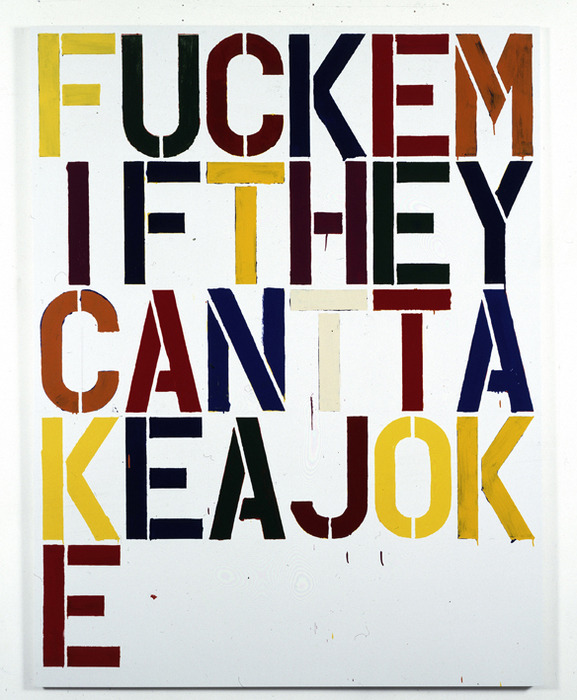
[via Art Observed]
“‘If we speak frankly,’ Keynes wrote, ‘we have to admit that our basis of knowledge for estimating the yield ten years hence of a railway, a copper mine, a textile factory, the goodwill of a patent medicine, an Atlantic liner, a building in the City of London amounts to little and sometimes nothing.’ Keynes distinguished this sort of incalculable uncertainty from quantifiable risk—the risk, say, that your straight flush will be trumped by four of a kind, or that you will be killed at Russian roulette. When you decide to build a factory or take a flyer on the stock market, the arithmetic of probability and rational decision theory provide no real guidance. Such decisions can be taken, Keynes wrote, only as a result of ‘animal spirits—of spontaneous urge to action rather than inaction, and not as the outcome of a weighted average of quantitative benefits multiplied by quantitative probabilities.’ In a boom, when animal spirits are high, businesses and entrepreneurs are brimming with investment projects, which banks and other financial institutions are all too eager to finance. After a bust, the opposite applies. In Keynes’s words, ‘If the animal spirits are dimmed and the spontaneous optimism falters, leaving us to depend on nothing but a mathematical expectation, enterprise will fade and die—though fears of loss may have a basis no more reasonable than hopes of profit had before.’”
—From “The Demand Doctor” by John Cassidy in The New Yorker, October 10, 2011
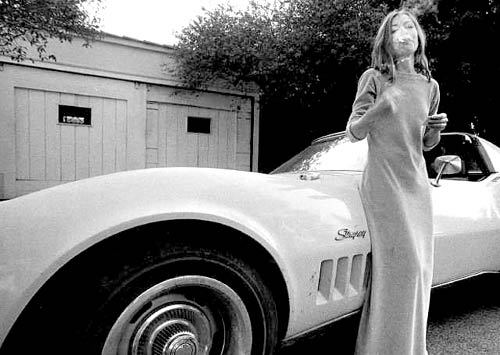
Another JD. [via Sunspel]




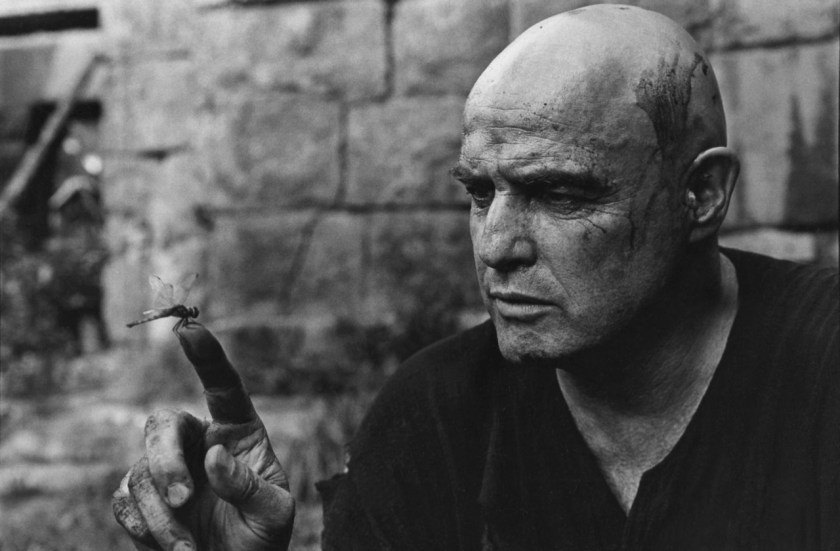

 Health + Youth